A4 · Portrait
210 × 297 mm · ISO 216
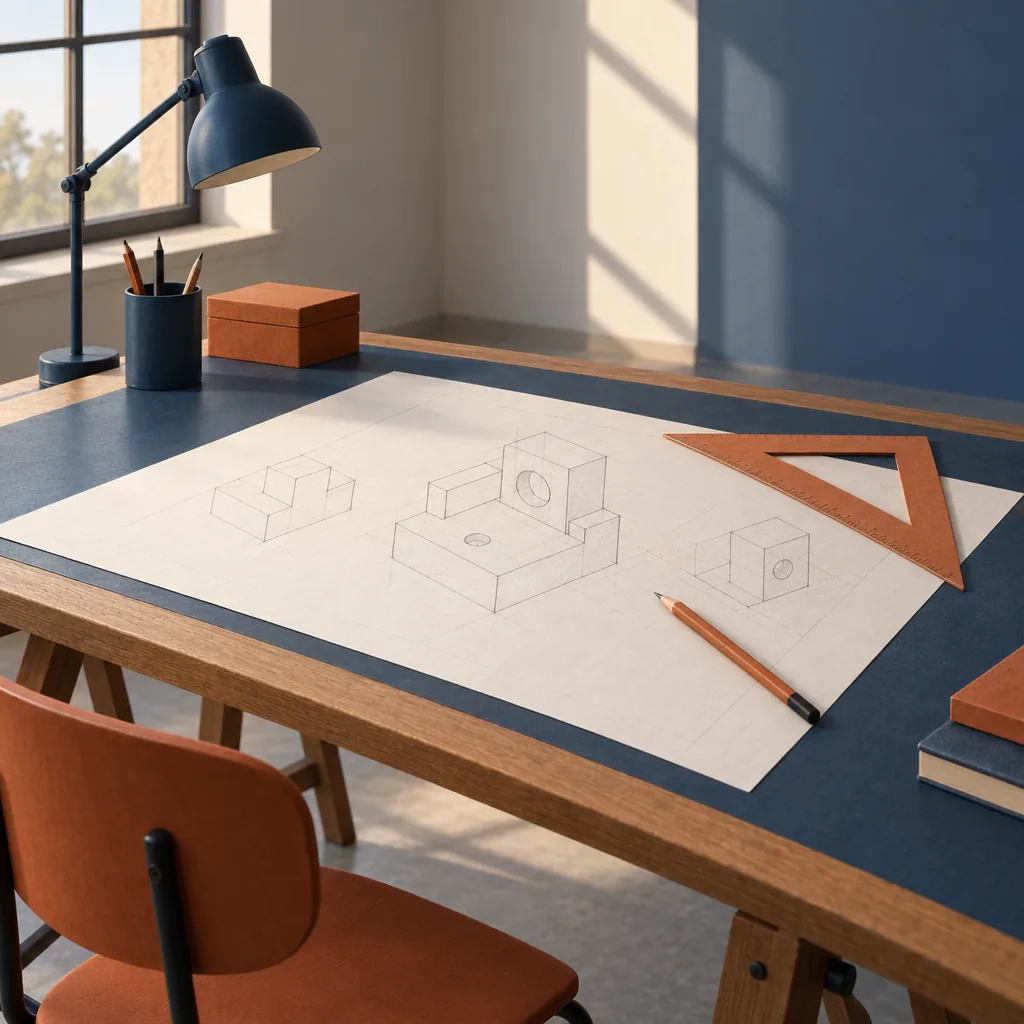
Equilateral triangular lattice - for tessellation and structural studies.
An equilateral triangular grid built from three families of parallel lines crossing at 60°. Distinct from isometric in that no axis is preferred - every direction is equivalent. Excellent for structural truss studies, tile-pattern design, hex-tile games and crystallographic illustration. Further reading: A practitioner reading list covers the standards lineage in more depth.
Triangular meshes underpin the structural geometry described in Eurocode 3 for triangulated steel trusses.
Buckminster Fuller championed the triangular and hexagonal grids during the development of his geodesic dome research in the 1940s and 50s.
Every variant on this page is delivered as a vector SVG with physical millimetre dimensions baked into the file, so a compliant printer driver will reproduce it at exact 1:1 scale by default. Choose the sheet size that matches your printer tray, set scaling to 100 % (never "fit to page"), and verify with the calibration check on our how-to-print guide. Buyer's guide: Comparing the major architectural scale rulers can help you pick the right physical scale rule to use over the printed grid.
210 × 297 mm · ISO 216
297 × 210 mm · ISO 216
297 × 420 mm · ISO 216
420 × 297 mm · ISO 216
420 × 594 mm · ISO 216
594 × 420 mm · ISO 216
216 × 279 mm · ANSI A
279 × 216 mm · ANSI A
216 × 356 mm · US Loose
356 × 216 mm · US Loose
279 × 432 mm · ANSI B
432 × 279 mm · ANSI B